


Ruston says aged care algorithm is failing older Australians

Liberal senator Anne Ruston has said the government’s decision to review its aged care assessment mechanism is effectively an admission that it was failing older Australians.
After widespread criticism, Aged Care Minister Sam Rae has announced a review the Integrated Assessment Tool (IAT), which used to determine the level of government funding a person should receive and the priority they should be given.
Ruston said the government had “finally capitulated” after a year of defending a computer-generated algorithm, which she said kept getting it wrong.
“We will always back a human being able to overdrive a decision when the computer, quite frankly, has made a botch of it,” she said in the Senate.
“Because no algorithm has ever grown old.
“And older Australians deserve a system that sees them as people, and not as data.”
Wells rejects claim that legislation is about censorship
What has the government learned about previous “ferocious backlash” to previous legislation from right-wing groups, Communications Minister Anika Wells is asked.
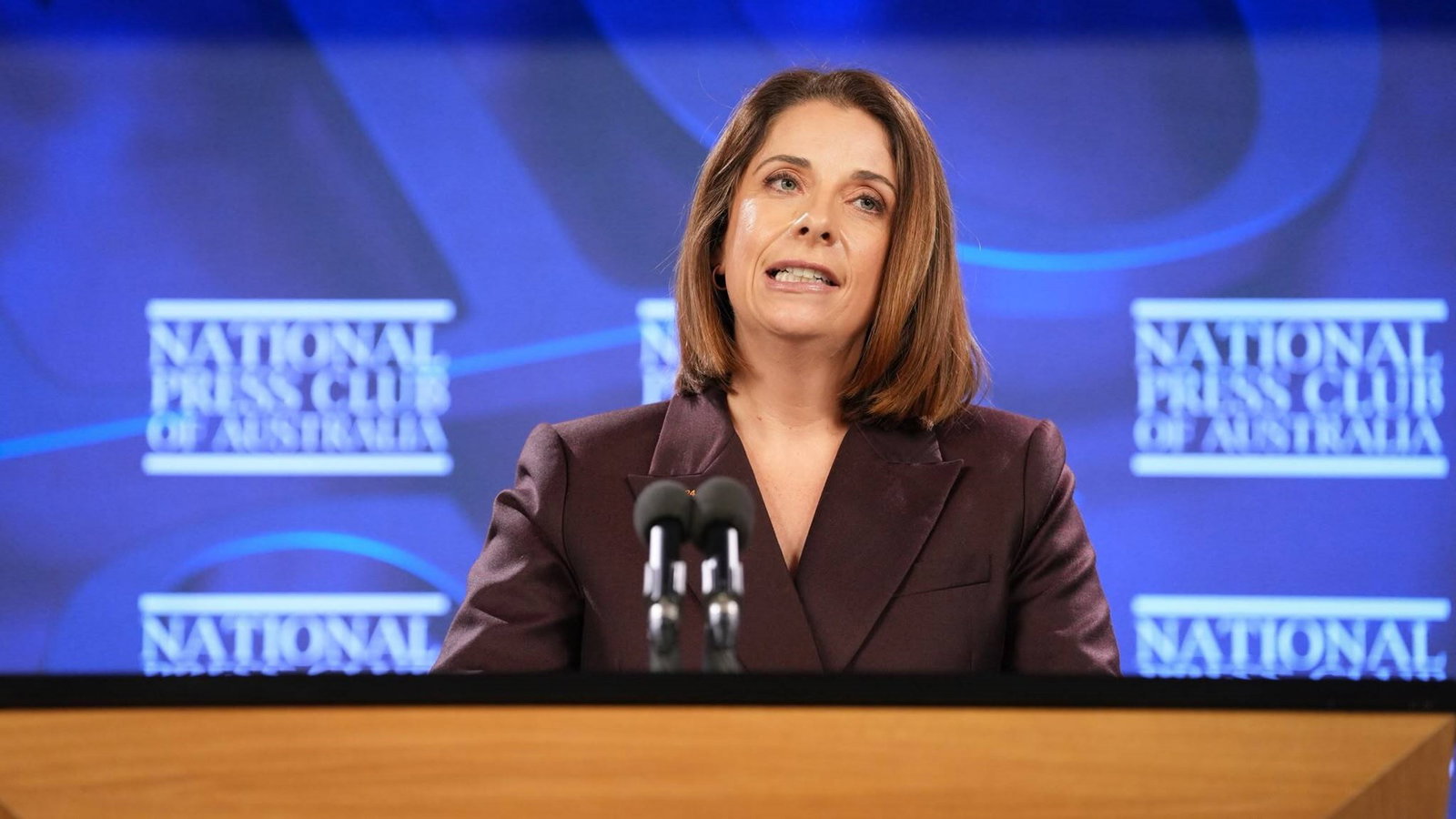
She’s called for a bipartisan approach to online safety, and rejected claims the legislation was about political censorship.
“This is not about what people say on the internet. It’s about what platforms do on the internet,” she said.
“And your right to disagree with me or the government or believe whatever you want to believe will not be impinged by a Digital Duty of Care. Your right to be free from harm, hopefully, will be improved by a Digital Duty of Care.”
And that’s the end of the National Press Club today! Thanks for tuning in.
Wells defends ‘outstanding’ eSafety commission

Communications Minister Anika Wells has been asked if eSafety commissioner is the worst job in the world given the amount of abuse Julie Inman Grant has received.
The communications minister has defended the eSafety commissioner and says she’s “done an outstanding job”.
“She was appointed by the Coalition and then re-appointed by the Coalition,” Wells says.
“And now many of those people who made that decision are leading the charge in their criticism against her and they should be held accountable for that change of position and for their conduct.”
Does the legislation miss an opportunity to block child sexual abuse material?
Child safety advocates have argued that tech operating systems and digital devices should already be incompatible with child sexual abuse material.
They’ve said there is harm-block technology that already exists.
Anika Wells is asked if her legislation missed an opportunity to include this.
“I think what we are doing here is holistic, it’s meant to be putting all online services on notice that they are responsible for the harm and the onus of responsibility is on them from the design point,” she said.
She said tech giants shouldn’t be cleaning up the harm after it’s occurred, but ensuring it doesn’t happen in the first place.
She wants to pass it by Christmas, but she’s open to amendments.
“I’ll say it with my last breath, if people have amendments in good faith that they think almost improve the bill I would love to read them.”
Wells questioned about impact on digital duty of care for small businesses
The communications minister has been asked about one of the provisions in the bill which requires big tech companies undertake an annual risk assessment.
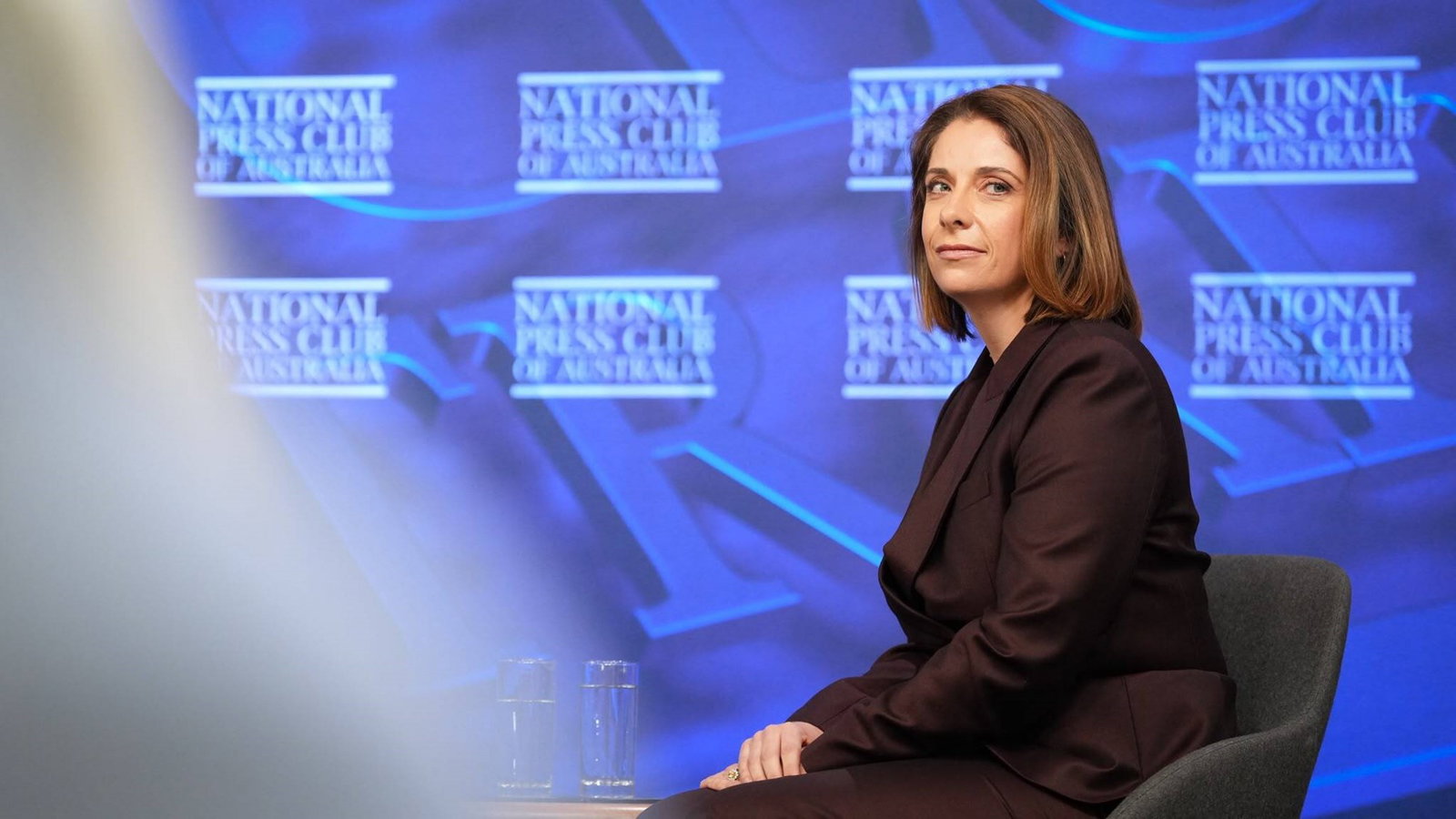
She’s been asked why small businesses in Australia haven’t been exempt from that in the legislation introduce this morning.
Anika Wells says the government tried to finesse that aspect of the legislation based on feedback received out of the exposure draft.
“We tried to finesse what we introduced this morning, based on the feedback that we received out of the exposure draft, and I did spend particular time in my second reading speech today speaking to the nuances of that,” Wells says.
Will Labor consider bigger fines to appease Greens?
The Greens have called for larger fines against tech giants who breach the digital duty of care legislation.
They’ve been calling for a percentage of global revenue as a penalty, rather than the government’s proposed fines of more than $100 million.
Communications Minister Anika Wells was asked if she’ll consider that, to get the legislation passed in the Senate.
She said she’s worked pragmatically with Greens Senator Sarah Hanson-Young to get things done in the past.
“I’ll keep negotiating in good faith with whom ever the Greens want to put in front of me, be that Senator Shoebridge or Hanson–Young,” she said.
New Greens Leader David Shoebridge has indicated he won’t be as co-operative as his predecessor, Larissa Waters. Is Wells concerned about that?
“No,” she said.
Wells quizzed on details of digital duty of care legislation
The communications minister has been asked why illicit drugs have been removed from the serious harms content list.
Anika Wells has also been asked why the federal government has reduced the penalty for tech companies found in breach of the law.
Criminal activity is prohibited under the harmful content list, the communications minister says.
“We are moving 17 codes and standards into law. So there is a bit of consolidation, but that [illicit drugs] is absolutely captured by a criminal activity under section 25,” Wells says.
And on penalties, Wells has sidestepped the question and says she doesn’t think anyone would make the case the government isn’t going hard enough.
“We want fines to force behavioural change, and we want social media companies to redeem their social licence. So, that is how it stands,” she says.
Limitations on sock puppets ‘not possible’, Wells says
Again returning to the question of sock puppet accounts, Anika Wells is asked if there will be any restrictions or limits placed on fake accounts in the legislation.
“There is nowhere in the bill that gives the Government, and by the Government in this instance the independent regulator, that power. It’s just not there,” she said.
She’s asked if the legislation could outline that such accounts can’t be used for disinformation or propaganda purposes.
“It cannot. I don’t know how to be more emphatic,” she said.
“It does not exist, it’s not possible.”
Wells working with tech companies on planned execution live stream
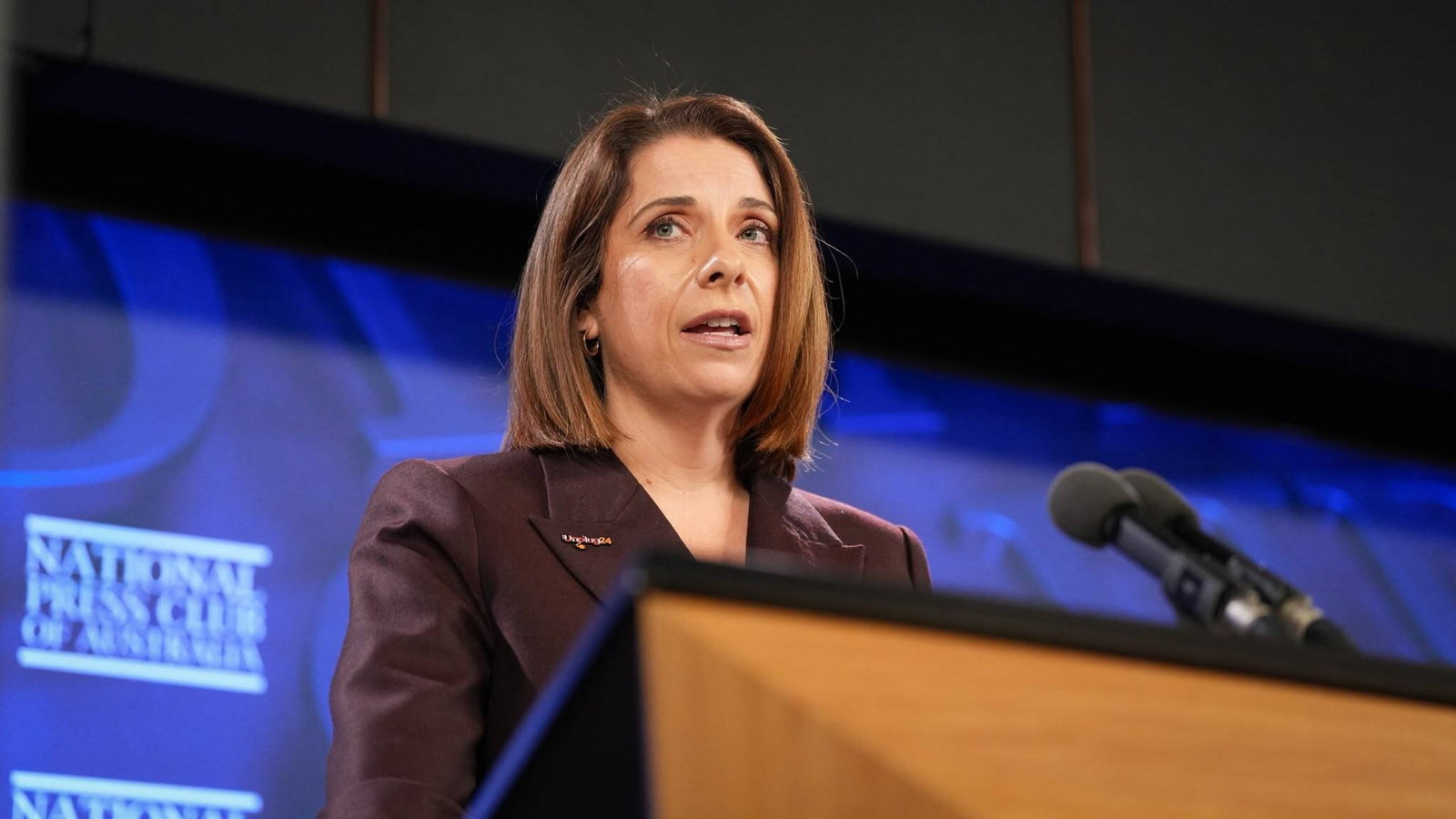
Anika Wells says the eSafety commission has put the social media platforms on notice about a planned live execution in the United States.
Last week, US Defense Secretary Pete Hegseth said the execution of Nidal Malik Hasan would be available for the public to watch.
But US media reports President Donald Trump is debating whether to call off the live stream of the execution.
The communications minister says while there’s “a lot of water to flow under the bridge” on that matter, but she will work with platforms to do everything “technically possible”.
“There’s a lot here that we don’t technically know about how that might even be streamed in order for us to take action to meet Australians’ expectations in this place,” Wells says.
Will sock puppets be a barrier for the bill?
The Communications Minister Anika Wells has been asked about the provision that would allow sock puppet or fake accounts to have legal protection.
Researchers have said they are important to test social media platforms and gather evidence, but critics say fake accounts can be used to spread disinformation.
“It’s important that e–Safety and researchers asked us to include this in the bill for good reason,” Wells said.
The Coalition has suggested this could also fuel propaganda. Would she consider removing that part of the legislation if it would win the support of the Coalition, she’s asked?
“Since I introduced the legislation this morning, the Shadow Communications Minister did reach out to my office, so perhaps green shoots,” she said.
Wells says government won’t ‘flinch’ from protecting Australian children
The communications minister has been asked whether Australia’s relationship with the United States is a “limiter”.
Trade Minister Don Farrell revealed yesterday his US counterpart is raising the digital duty of care with at every meeting.
Anika Wells says Australia is a sovereign nation that makes laws for Australian citizens.
“We are a sovereign nation, and we do not flinch from protecting Australian kids from known harms. we will continue to do that,” Wells says.
Asked if the government is prepared to cop consequences from the US government, Wells says that’s a hypothetical.
She noted there were discussions happening between the Australian and US governments.
“These discussions are ongoing and will continue to work well with all of our counterparts,” she says.
Wells open to negotiating in good faith
Communications Minister Anika Wells is asked about what steps she’s willing to take to negotiate on the legislation.
The path for the digital duty of care is not yet clear, and would need the support of the Greens in the Senate.
One option being floated is that groups can take class actions in the courts rather than just leaving it to the e–Safety Commissioner.
“It is something that we would contemplate,” she said.
She is asked about a safety-rating system.
“I need to get this through the Senate to legislate a baseline basic safety standard, but, yes, it is my vision that ultimately we would be in a race to the top where tech companies want you to know them as the safest place your child can be,” she said.
She adds she’s happy to look at any amendment in good faith.
Digital duty of care ‘isn’t radical,’ communications minister says
In conclusion, the communications minister says companies who build their platforms must take responsibility for them.
“For the boy in Victoria with 50 tabs open and for every student who, two hours from now, will leave class and enter the online world,” Wells says.
“If you build it, you are responsible for its risks. That isn’t radical. It is just Australian.”
Digital duty of care aims to create space people can ‘work, learn, play or relax’
Communications Minister Anika Wells has tried to justify the government’s reasons for introducing the digital duty of care legislation.
The communications minister has pointed to AFP Commissioner Krissy Barrett’s warning last week that young people are being radicalised online.
“By the time the AFP is knocking on a door, the harm is already done. That’s what a digital duty of care is for. It moves the safety net upstream to the people who design the product, before it ever reaches a child,” Wells says.
The minister has spoken about cases where a 14-year-old girl in Western Australia was told to self-harm on Roblox and Discord.
Wells speaks of another case where a 13-year-old boy in Victoria who was lonely and struggling to make friends went to 50 different AI chatbots.
Some of the chatbot told him he was ugly and steered him towards hating himself and egged him onto self-harm.
“We would never accept that from a toy maker, a carmaker, or a food manufacturer,” she says.
“The principle of the Digital Duty of Care is simple. If you create a space where people work, learn, play or relax, you must take reasonable steps to make it safe.”
‘We are not controlling free speech’: Wells hits back at digital duty of care criticism
Communications Minister Anika Wells has hit back at criticism of the federal government’s duty of care legislation.
The Coalition has accused the federal government of trying to pursuit political censorship with the bill.
But the minister says the bill introduced to parliament today is not a stepping stone for regulating misinformation and disinformation.
“If adults listen to manosphere podcasts, or people post their views about the government, or make memes, or want to say the moon landing was fake, they can continue to do so without restriction,” Wells says.
“We are not controlling free speech. And we are not conducting covert surveillance.”
Wells explains the government has removed controversial ministerial directions in the bill, meaning any additions of harms will have to be included with legislation.
She adds there are protections in place for journalists and news media.
Digital duty of care will set basic safety standards: Wells
The communications minister says the digital duty of care bill will enable to shape technology for future generations.
Anika Wells says a “reactive, patchwork” system cannot keep pace with the big tech sector where a “billionaire can buy a platform and strip its moderation”.
The minister says the digital duty of care will set basic safety standards for online service.
“We must shift the burden from the shoulders of victims to the companies that are creating the environments where harms occur,” Wells says.
“The core of the duty is to provide a safe online environment, where all Australians are protected from seriously harmful and illegal content.”
Anika Wells sets out reasons for digital duty of care legislation
Communications Minister Anika Wells has started her speech where she’s set out why the government has introduced its digital duty of care.
Wells has equated the online protection bill to making seatbelts compulsory, random breath testing and plain packaging.
“The problem today, is that big tech has been allowed to live-test its products on Australians. Today I want to make one simple argument: if you build it, you are responsible for its risks,” Wells says.
“And that argument is no longer just ours. It’s going global. We have seen this with our world-leading social media law.”
She’s launched a defence of the government’s social media ban for under-16s, saying big tech aren’t doing enough to enforce the ban.
Wells says the eSafety commission found that three months after the law came into effect, young people surveyed still had an account and hadn’t been asked to verify their age.
“The law is not failing. Platforms are failing to comply with the law,” she says.
Anika Wells to speak at the National Press Club shortly
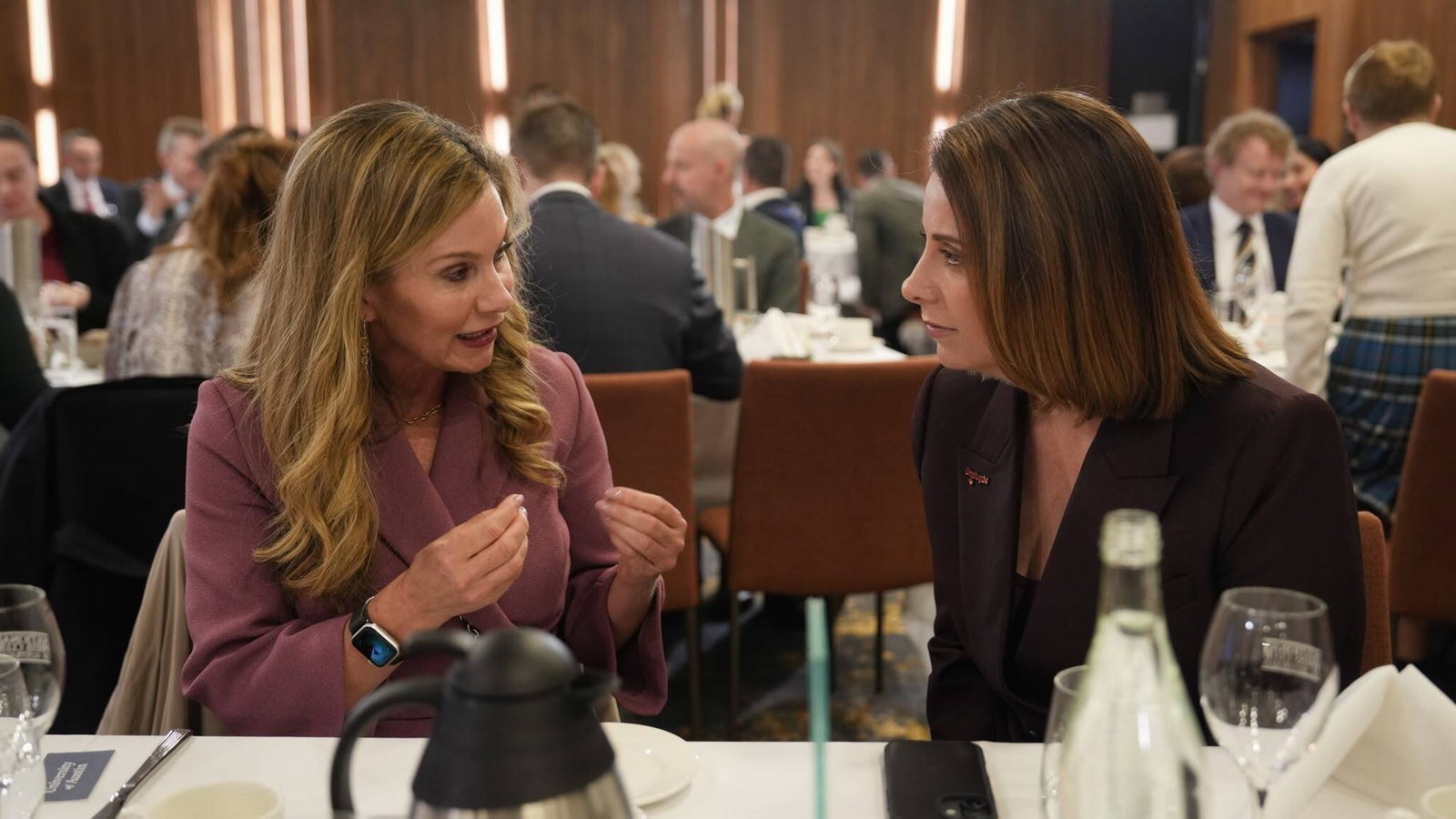
Communications Minister Anika Wells will be stepping up to speak at the National Press Club soon to speak about Labor’s digital duty of care bill.
The legislation was introduced to parliament this morning, and if passed, would require big tech companies prevent under-18s from seeing harmful content on their platforms.
Labor removed a controversial ministerial discretion from the legislation, meaning any harms would have to be added through an amendment passed by parliament.
Stand by! The communications minister is about to step up and speak in just a moment.
Labor to commission independent review into aged care assessment tool
The federal government will commission an independent review of the aged care prioritisation and assessment mechanism.
The Integrated Assessment Tool (IAT) is used to determine the level of government funding a person should get and the priority they should be given.
But it has come under intense scrutiny and subject to complaints because it uses an algorithm to decide the outcome, which cannot be overruled.
In a statement, Aged Care Minister Sam Rae says the review will build on the feedback on the changes.
He says the review will be conducted by people with geriatric medicine, dementia care, allied health, CALD and First Nations health expertise.
“The government will set out a clear plan to ensure the classification and priority mechanisms reflect the care needs of older Australians,” Rae says.
“Terms of Reference will be released in the coming weeks. The review will report to government, and the report will be published in full and tabled in Parliament, in the first half of 2027.”
Commissioner examining how Commonwealth could hold states, territories to account on child protection
The National Commissioner for Aboriginal and Torres Strait Islander Children and Young People, Sue-Anne Hunter, has given more details on the outcomes of her child protection roundtable in WA last month.
Media scrutiny of two high-profile child protection failures in the WA mining town of Port Hedland prompted her visit.
At the roundtable, Hunter heard directly from stakeholders and community members about the faults they saw in the state’s child protection system.
She said it was “really clear” the systems “aren’t working” and that families and communities needed to be “better supported”.
“It’s really clear we need a unified approach from the top down to help our kids, we need to support families better and communities surrounding them,” she said.
The commissioner said there were two key asks to come out of the roundtable.
“One is a WA commissioner for Aboriginal and Torres Strait Islander children and young people, and the other one was a peak body around child safety and families,” she said.
Hunter is also planning a targeted review of the Pilbara’s child protection system, looking at how it interacts with housing, police, health, education and the community.
“We need a whole-of-government approach on this; it’s a whole-of-government failure,” she said.
Hunter said too often Indigenous child safety was treated like a “cultural issue.”
“This isn’t an Aboriginal issue. This is an issue of government and their systems failing.”
She said her team was also looking into what role the Commonwealth could play in holding states and territories accountable for child protection outcomes.
Leave a Reply